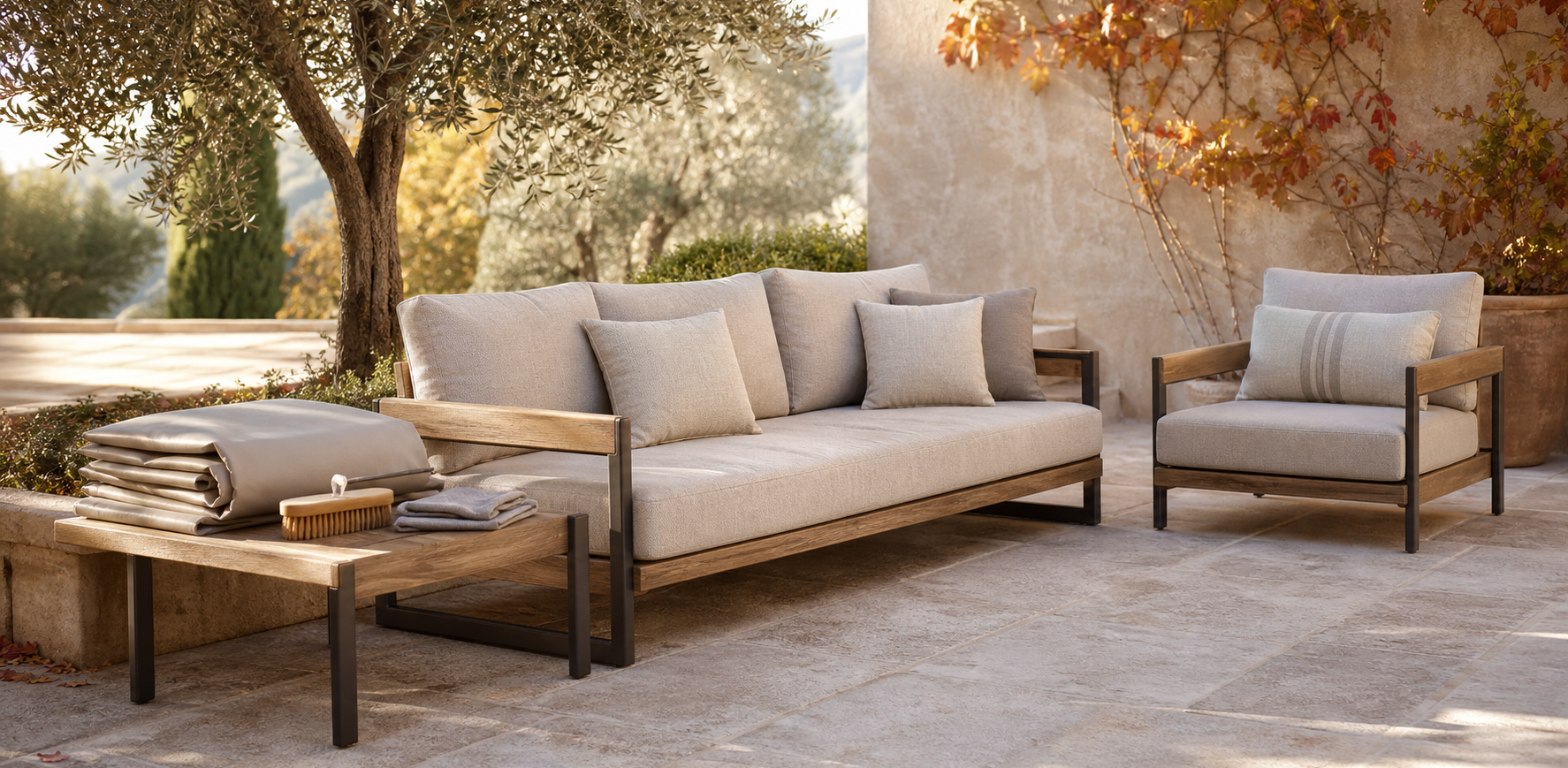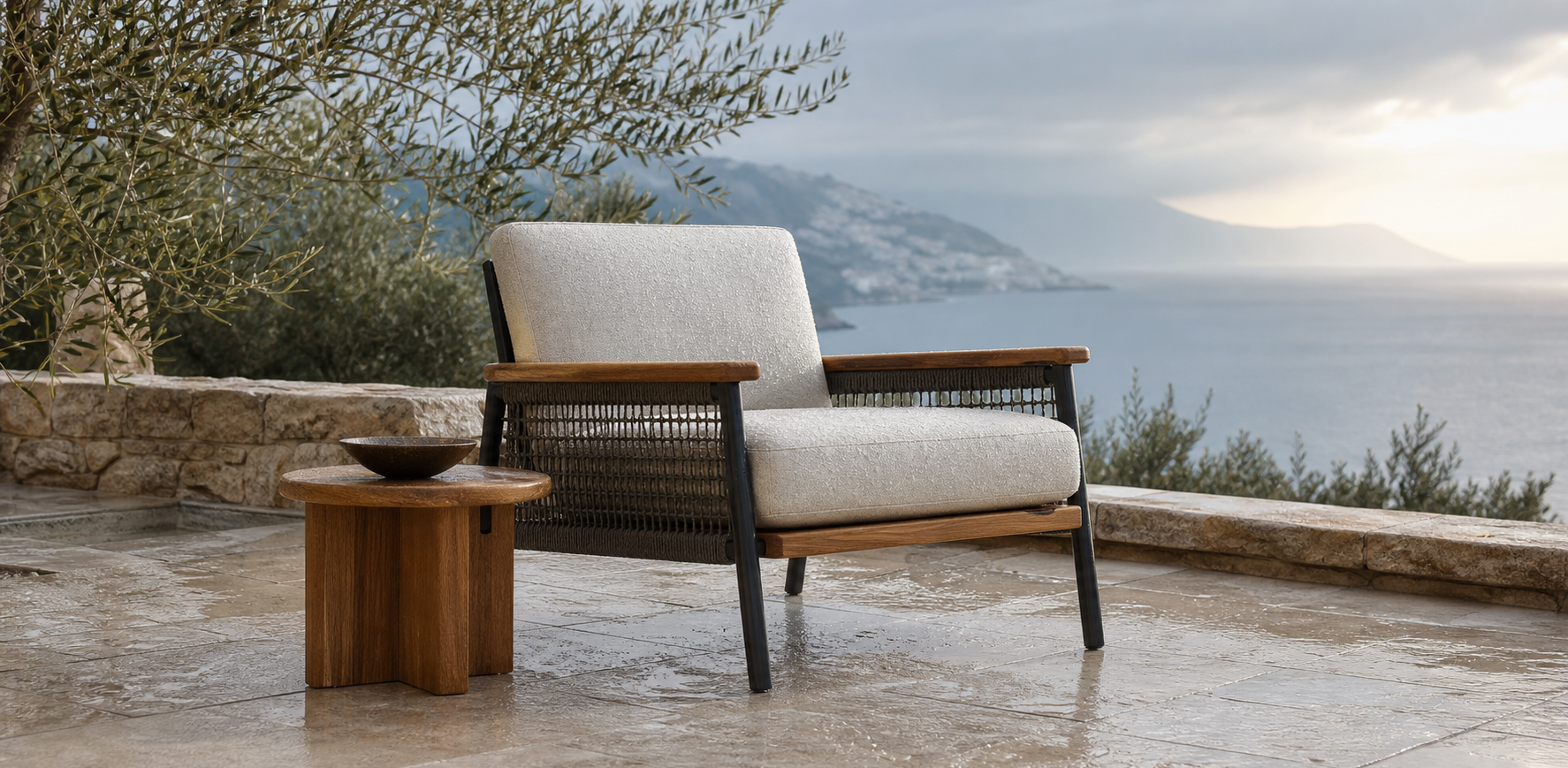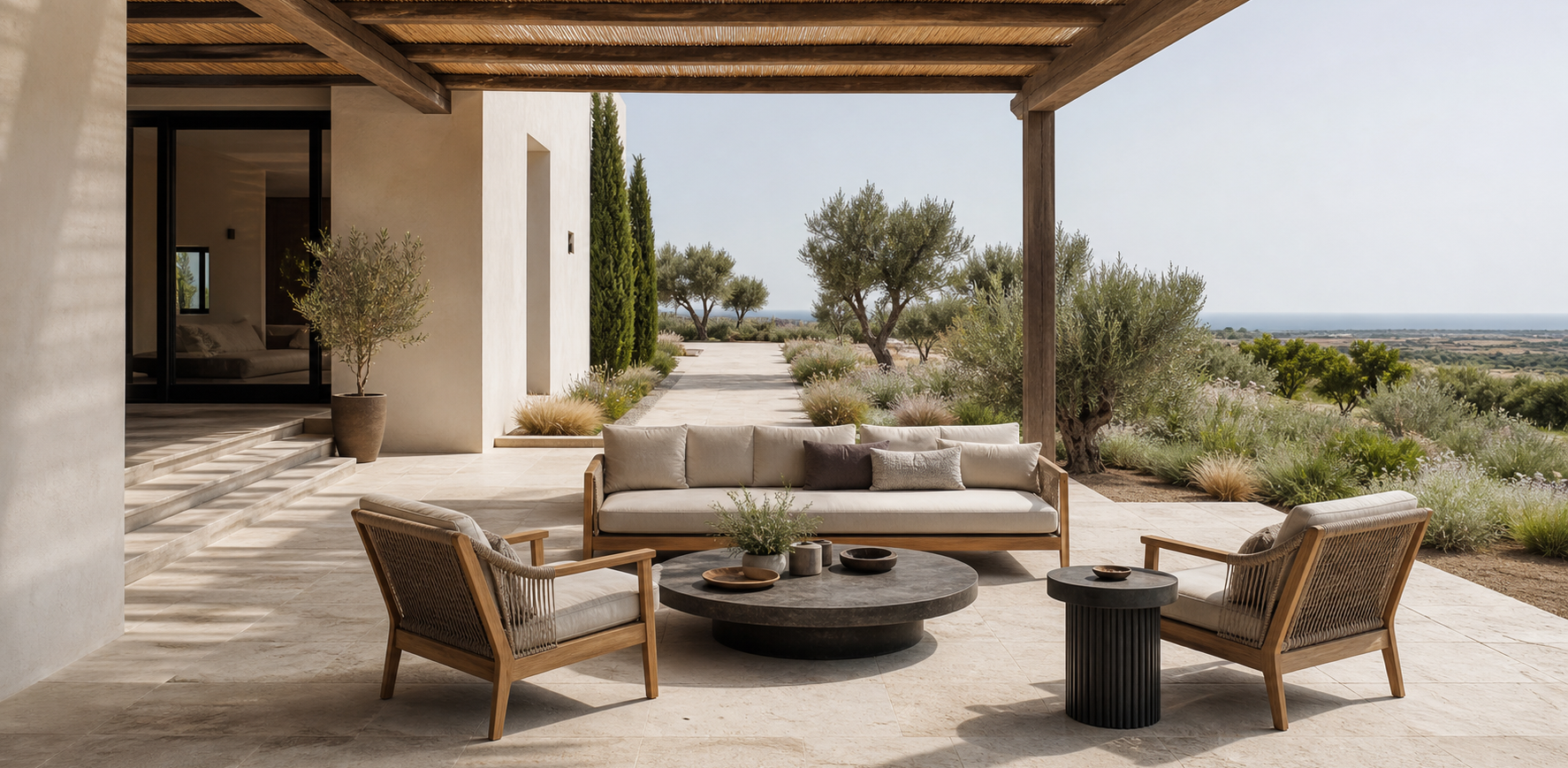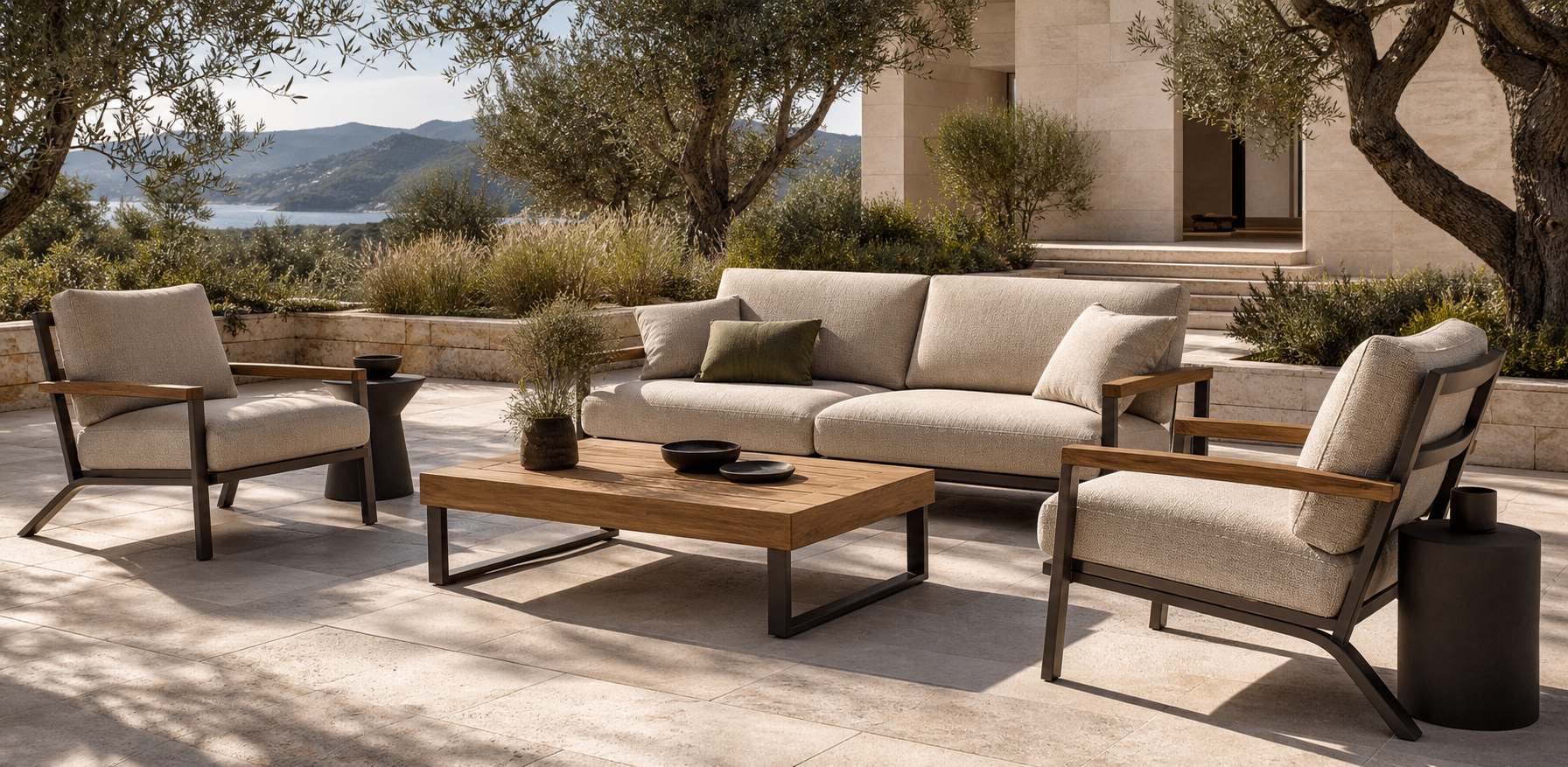
The best outdoor seating does more than survive the weather. It gives shape to slow mornings, long lunches, spontaneous conversations, and quiet evenings outside. When the scale is right and the materials are chosen with care, a terrace begins to feel less like an extension of the house and more like a room with its own rhythm.
Choosing well is not about finding the heaviest frame or the thickest cushion. It is about understanding how climate, construction, comfort, and maintenance work together. The goal is simple: furniture that feels inviting now and continues to earn its place over time. Begin by exploring the wider Vantaro Terra collections, then use the principles below to judge what truly belongs in your space.
Start With the Way You Live
Before comparing finishes or fabrics, decide what the space needs to make possible. A narrow balcony used for morning coffee requires a different arrangement from a large terrace designed for weekend gatherings. The most successful outdoor rooms begin with habits rather than objects.
For quiet daily use, prioritize one deeply comfortable seat, a small surface within reach, and an open view.
For conversation, arrange seats so people can face one another without turning or raising their voices.
For dining and entertaining, protect clear routes between the house, table, and serving area.
For flexible spaces, choose lighter lounge chairs and side tables that can move as the occasion changes.
Measure the usable area, not only the full floor plan. Doors need room to open, planters occupy visual space, and circulation paths should remain generous even when every seat is in use. Leaving deliberate emptiness around furniture often makes a small terrace feel calmer and more luxurious.
Read the Climate Before Choosing Materials
Outdoor materials age differently depending on sun, rain, salt air, humidity, and temperature changes. A material is not durable in isolation; it is durable when it suits its environment and is assembled correctly.
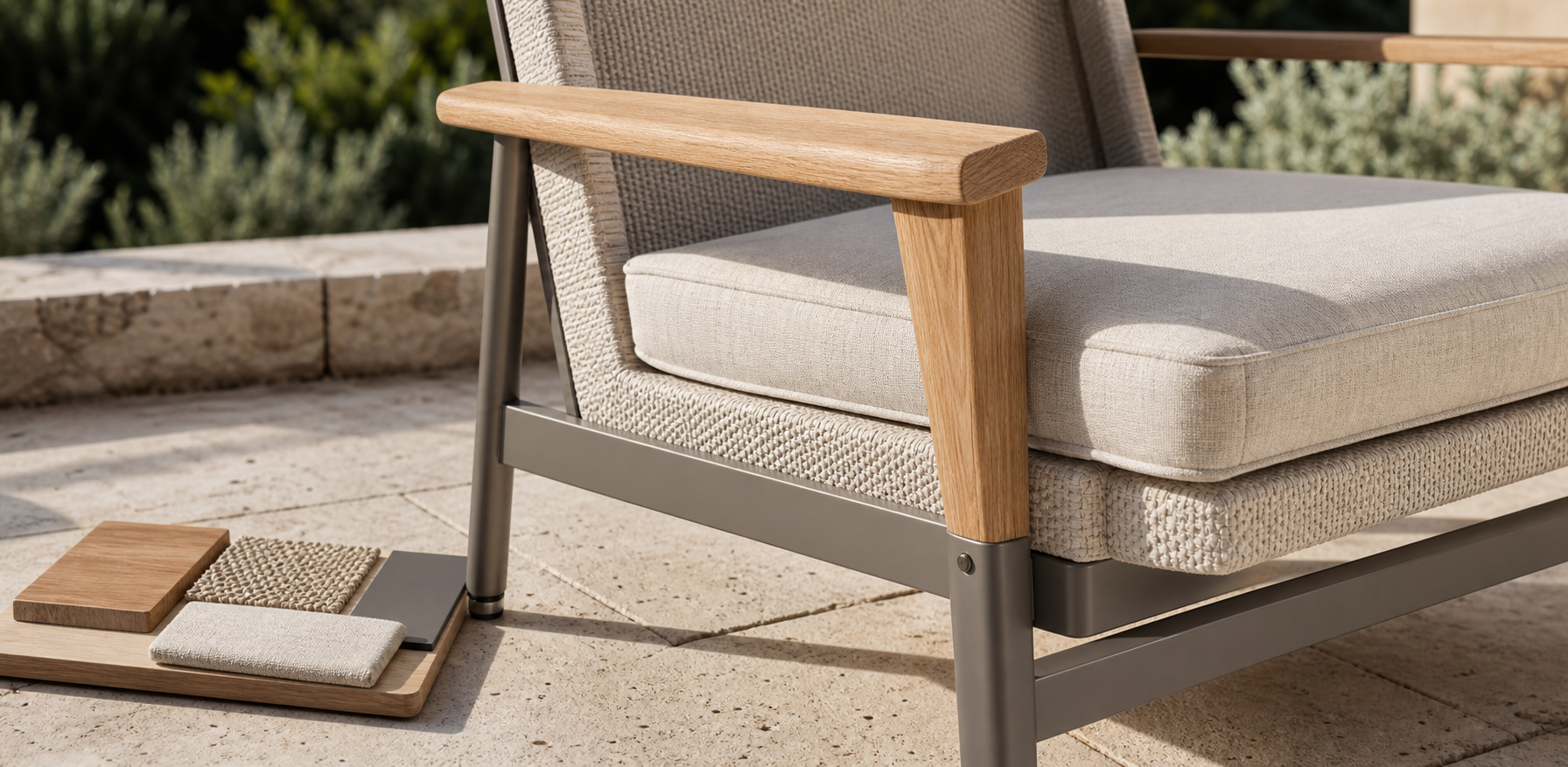
Responsibly sourced teak offers dimensional stability and develops a soft silver patina when left untreated. Consistent grain, smooth joinery, and well-finished edges are stronger quality signals than surface color alone.
Powder-coated aluminum is light, corrosion resistant, and practical for furniture that needs to move. Look for even coating, protected welds, and discreet drainage points.
Performance textiles should resist fading, dry efficiently, and feel comfortable against the skin. Removable covers make deep cleaning and future replacement easier.
Woven outdoor fibers add texture without the maintenance of natural rattan. The weave should remain even around corners and feel securely tensioned against the frame.
Material responsibility also matters. Recycled metals, FSC-certified woods, and lower-impact textiles can reduce environmental cost while supporting long service life. Vantaro Terra’s sustainability approach explains how responsible sourcing and enduring design belong to the same decision.
Look Beyond the First Five Minutes of Comfort
A soft cushion can make almost any chair feel pleasant in a showroom. Lasting comfort comes from proportion: seat depth, back angle, arm height, and the relationship between the frame and the body.
For relaxed lounging, a deeper seat and gently reclined back encourage the body to settle. More upright seating supports conversation, reading, and dining. Neither is universally better; the right choice depends on the posture the space is meant to support. If several people will use the furniture, pair a generous sofa with lounge chairs of different depths rather than forcing one profile to serve everyone.
Cushion construction deserves equal attention. Quick-drying foam or well-ventilated cushion cores help moisture escape, while breathable covers reduce the heavy, damp feeling that can follow humid weather. Seams should be straight, zippers should be protected, and cushions should return to shape after use instead of collapsing at the front edge.
Plan for Shade, Airflow, and Circulation
Furniture cannot create comfort by itself. The surrounding conditions determine whether a seat is used for ten minutes or an entire afternoon. Observe the space at different hours before finalizing the layout: where shadows move, where wind accelerates, and where reflected heat gathers near walls or glass.
Keep primary seats out of the harshest afternoon sun or pair them with adjustable shade.
Preserve airflow behind deep sofas and between large pieces, especially in humid climates.
Leave a comfortable path around tables so guests can move without interrupting the conversation.
Use side tables where a hand naturally reaches, not where symmetry looks most perfect.
The arrangement should feel composed without becoming fixed. A movable chair can turn toward the view; a small table can support coffee in the morning and drinks at night. This adaptability is what allows an outdoor room to remain useful across seasons and occasions.
Choose a System That Can Evolve
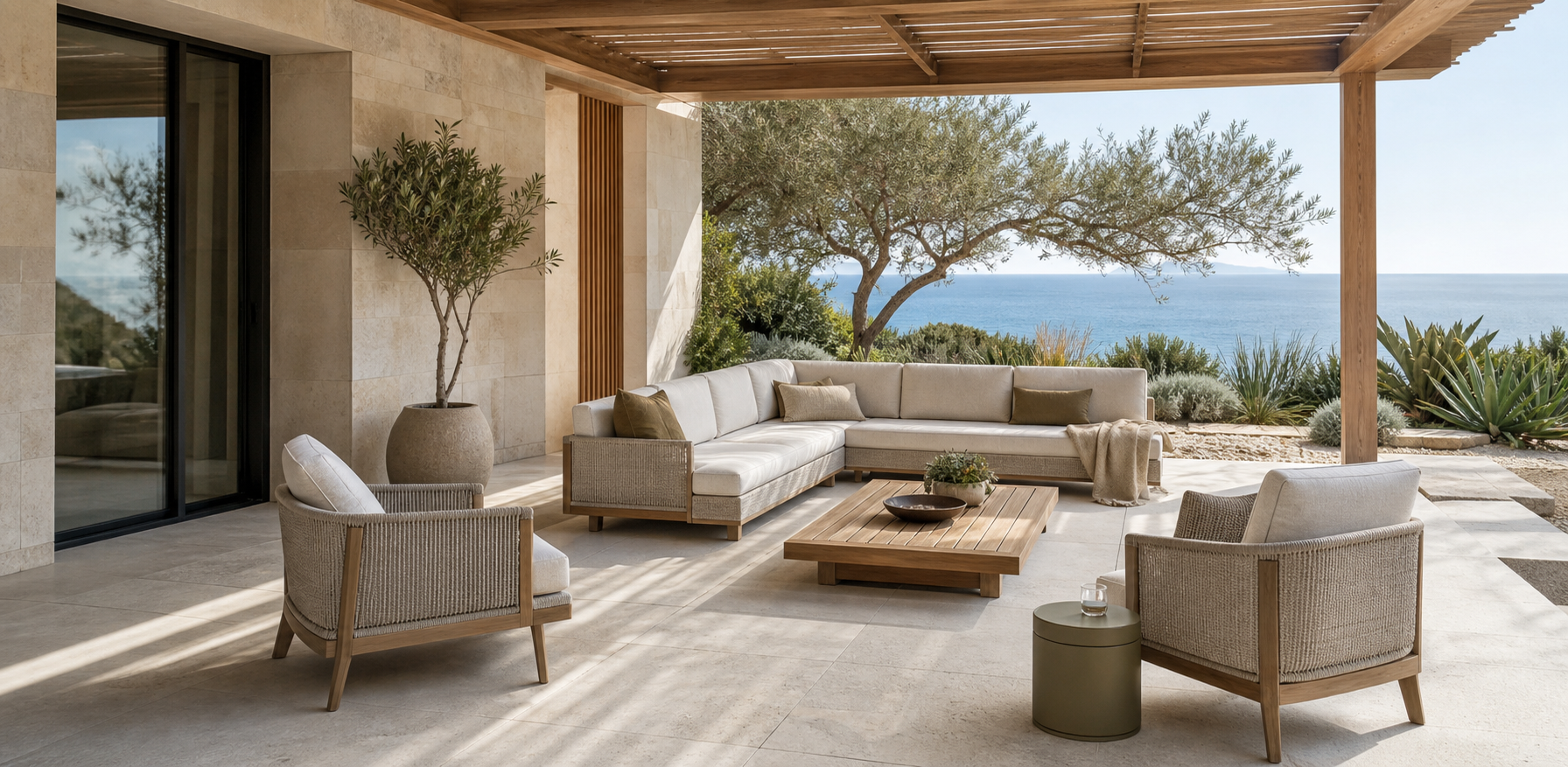
Outdoor spaces change. Families grow, entertaining habits shift, and a terrace may need to support both solitude and celebration. Furniture works harder when pieces share a coherent material language and can be rearranged without losing visual balance.
A modular sofa can expand or separate into smaller zones. Independent lounge chairs can move between a conversation group and a quiet corner. Side tables are often more adaptable than one oversized coffee table. Choosing a family of compatible pieces also makes future additions feel intentional rather than improvised.
Once the furniture system is defined, the next decisions become easier. Compare frame, textile, and finish options in Outdoor Furniture Materials, then use How to Plan an Outdoor Seating Layout That Feels Effortless to turn those pieces into a balanced setting. After installation, follow How to Care for Outdoor Furniture Through Every Season to protect the arrangement through changing weather.
Make Care Part of the Design
Maintenance should protect the character of the furniture, not become a constant burden. Before buying, ask what needs to happen after rain, during a long absence, and at the end of the season.
Brush away dust and debris before washing so particles do not work deeper into fabric or weave.
Clean with mild products recommended for the material; aggressive chemicals can damage coatings and water-repellent finishes.
Allow cushions to dry fully before covering or storing them.
Use breathable covers with enough room for air movement, and avoid trapping moisture against frames.
Inspect glides, fasteners, seams, and drainage points at the beginning and end of each season.
Good care is usually simple and regular. It preserves function, makes repairs easier to spot, and allows natural materials to age with dignity. Furniture designed for replacement covers, accessible hardware, and individual component repair is more likely to stay in use than furniture built as a sealed, disposable object.
The right outdoor seating should not ask for attention every day. It should quietly support the life happening around it—holding its proportions, weathering honestly, and becoming more familiar with every season. Choose for the climate, plan for real movement, and favor materials and construction you will still value years from now.