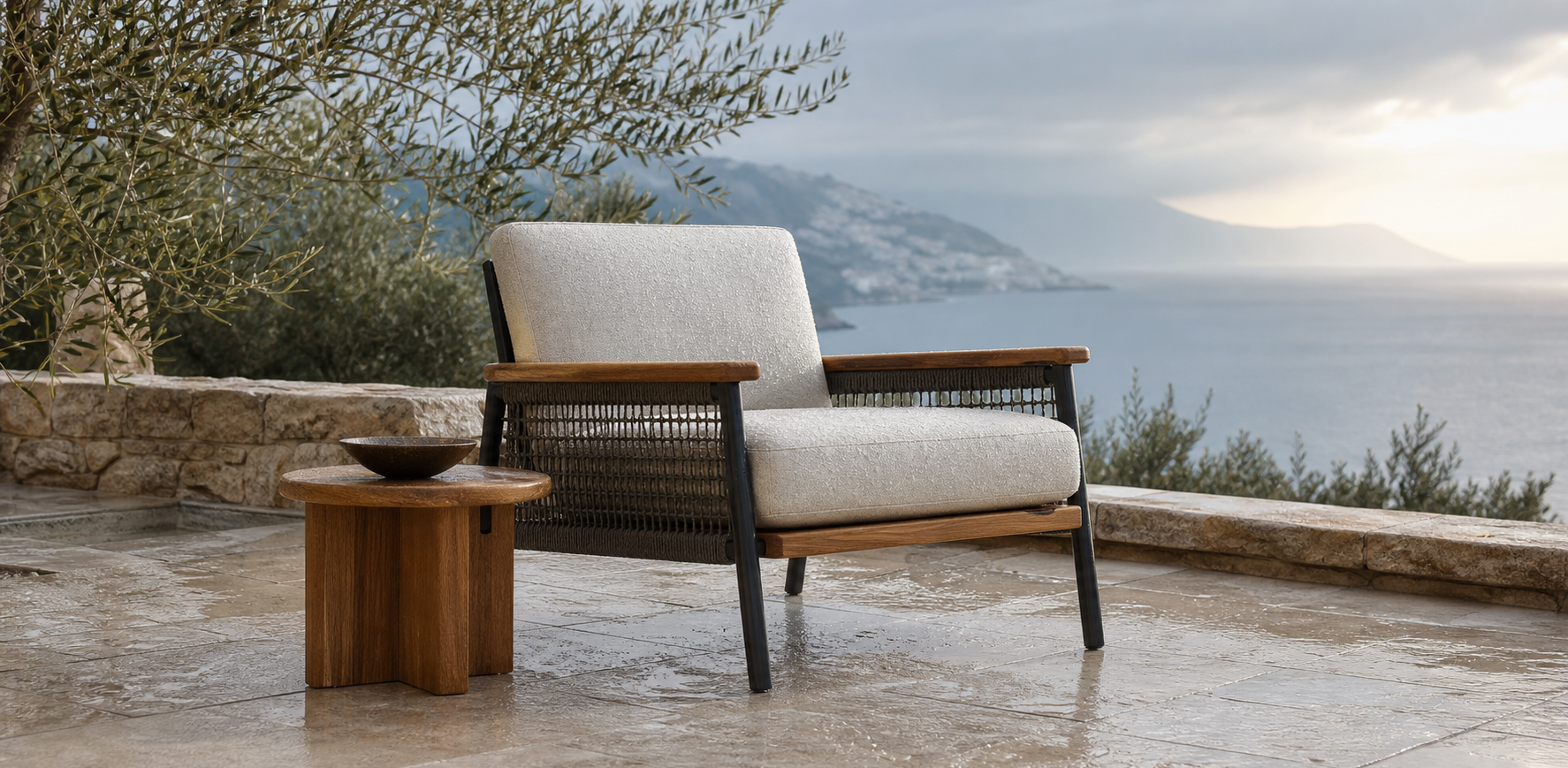
Outdoor furniture does not need constant attention to age well. It needs the right attention at the right time: loose debris removed before it becomes embedded, moisture given a way to escape, spills addressed without aggressive chemistry, and covers used only when the furniture is fully dry.
The most effective routine is small, regular, and adapted to the actual materials. Before following any general advice, keep the manufacturer’s instructions for each component. If you are still comparing frames, fabrics, and cushion systems, read Outdoor Furniture Materials first.
Let Material Choice Set the Care Routine
A teak frame, powder-coated aluminum base, woven panel, stone tabletop, and performance-fabric cushion should not all be treated with the same product. Their finishes respond differently to abrasion, heat, moisture, and cleaning agents. Record the exact material and finish when the furniture arrives rather than trying to identify it after a stain appears.
Keep care instructions, spare hardware, touch-up products, and replacement-cover information together. Test any new cleaner on a hidden area and avoid mixing products. When in doubt, begin with the least aggressive method: a soft brush or vacuum, clean water, a mild material-appropriate solution, and a thorough rinse where recommended.
Furniture selected for its climate is easier to maintain. The broader guide How to Choose Outdoor Seating That Lasts explains how exposure, construction, and repairability shape long-term performance.
Use a Five-Minute Weekly Reset
Regular dry cleaning prevents many larger jobs. Brush leaves, dust, and pollen from horizontal surfaces, seams, and the space beneath cushions. Wipe table surfaces before residue is warmed by the sun. Check that drains remain open and that furniture feet are not standing in collected water.
Lift cushions and remove debris from both the cover and supporting frame.
Brush woven panels gently in the direction of the weave.
Wipe metal frames with a soft damp cloth, especially near the coast.
Move planters or accessories that trap moisture against the furniture.
Look for a loose glide, fastener, seam, or zipper before it becomes a repair.
This reset is also an opportunity to let every surface breathe. A few minutes of airflow around the cushions and frame can be more useful than keeping furniture continuously hidden beneath a cover.
Dry Cushions Correctly After Rain
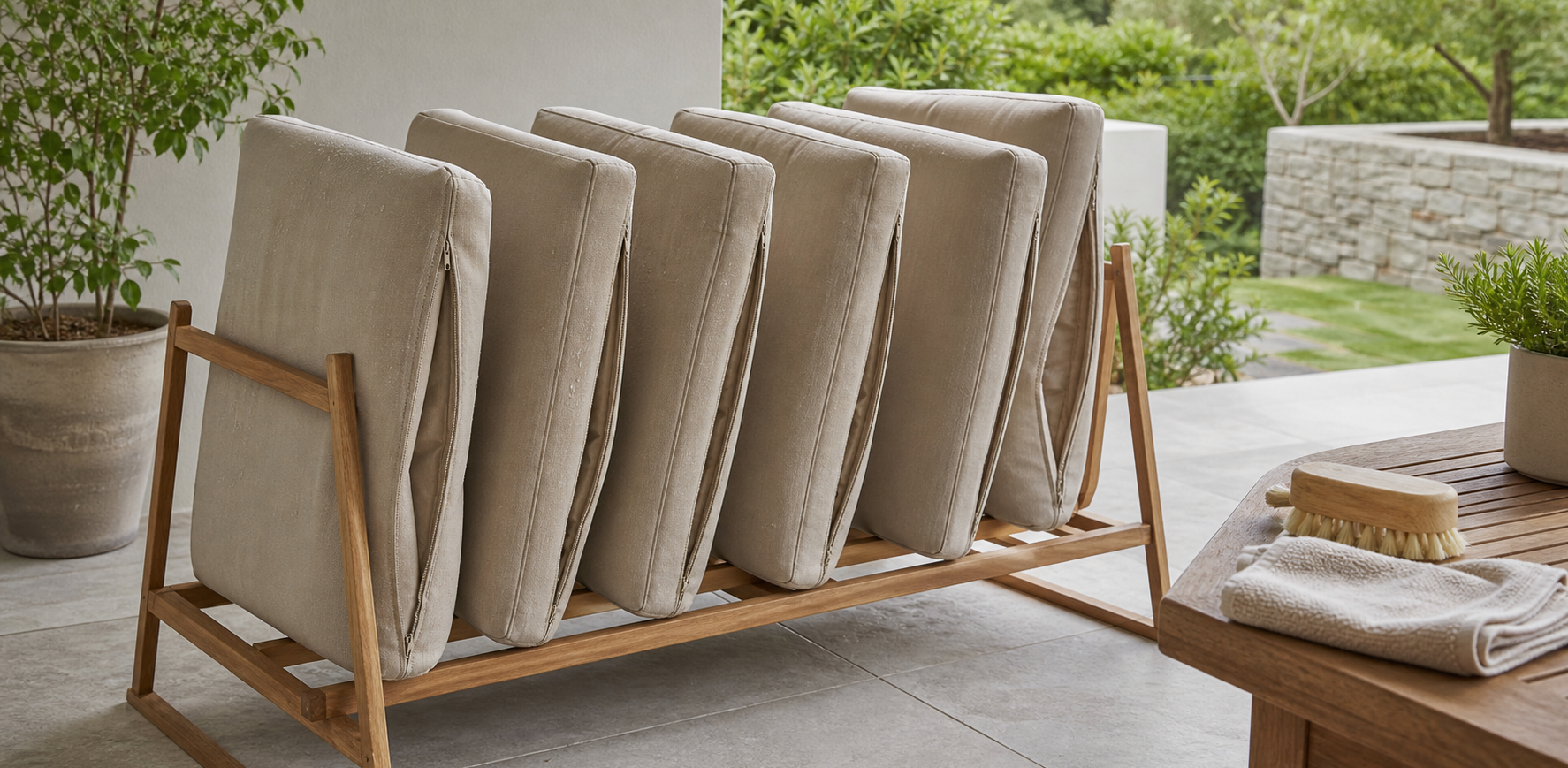
The top surface can feel dry while moisture remains inside the cushion. After rain, remove standing water from the frame, place cushions upright with gaps between them, and open zippers or vents if the manufacturer recommends it. Air should be able to move across both faces and around the lower edge.
Do not place a cover over damp upholstery. Enclosing moisture slows drying and can create the conditions for odor or mildew. Avoid forcing the process with intense heat, which may affect foam, coatings, or textile finishes. A sheltered, ventilated location is usually more useful than a sealed storage box.
Once everything is fully dry, return the cushions to their positions and check that drainage gaps beneath them are still open. If a cushion repeatedly remains wet long after the others dry, inspect its core, cover, and support instead of treating the symptom as normal.

Clean Each Surface With Restraint
For wood, begin by removing loose dirt with a soft brush, then clean along the grain with the product and method specified for the finish. Natural teak may gradually silver outdoors; restoring a honey color is an aesthetic choice, not a requirement for every setting. Avoid improvised oils or harsh pressure washing that can create uneven surfaces.
Powder-coated aluminum generally responds well to mild washing and a soft cloth. Pay attention to joints, undersides, and areas where salt can collect. Abrasive pads may dull the finish, while strong chemicals can damage the coating. If the surface is deeply scratched, follow the manufacturer’s repair guidance rather than sealing contamination beneath a random paint.
Woven outdoor fiber should be brushed or rinsed gently so tension is not disturbed. Stone and ceramic tabletops require care matched to their porosity and finish; acidic or strongly alkaline products may mark some surfaces. For fabrics, blot spills instead of grinding them into the weave, and wash removable covers only according to their label.
Respond to Stains Before Escalating
Fresh spills are usually easier to manage than dried residue. Remove solids without spreading them, blot liquid with a clean absorbent cloth, and work from the outside of the mark toward the center. Use small amounts of the approved solution and rinse or extract it completely so cleaner does not become a new residue.
If mildew appears, first address the moisture and airflow that allowed it to develop. Separate the affected component where practical, follow the textile or furniture maker’s treatment instructions, and dry everything thoroughly before reassembly. Repeated growth may indicate a saturated cushion core, blocked drainage, or storage that is too enclosed.
More force is not always more effective. Strong pressure, stiff brushes, steam, bleach, and household solvents can alter color or surface finish. When the material is valuable or the stain is unfamiliar, professional advice is safer than an escalating sequence of untested products.
Cover and Store Without Trapping Moisture
A well-fitted cover protects furniture from debris and long periods of weather exposure, but it should be breathable and shaped so water does not pool. Fit it only over clean, dry furniture. Leave the designed vents unobstructed and make sure the hem does not seal the furniture against a damp floor.
Store cushions in a dry, ventilated space rather than compressing them while damp. Open slatted shelving allows air to circulate and helps cushions keep their form. Clean and dry covers before folding them, and label hardware or modular connectors if the furniture is disassembled.
At the beginning and end of the main outdoor season, complete a slower inspection:
Tighten accessible hardware according to the manufacturer’s guidance.
Replace worn glides before metal or wood contacts the floor.
Check seams, zippers, woven tension, and cushion recovery.
Clear every drainage opening and inspect the underside of frames.
Arrange repairs and replacement parts before damage spreads.
Good maintenance supports a longer service life and reduces unnecessary replacement, an idea that sits at the center of Vantaro Terra’s approach to sustainability. It also protects the work invested in a thoughtful outdoor seating layout.
The ideal routine eventually becomes almost invisible: brush, inspect, dry, and protect. Furniture stays ready for everyday use, natural materials are allowed to age honestly, and small issues are corrected while they are still simple. Care is not separate from design; it is what allows good design to remain part of daily life.